
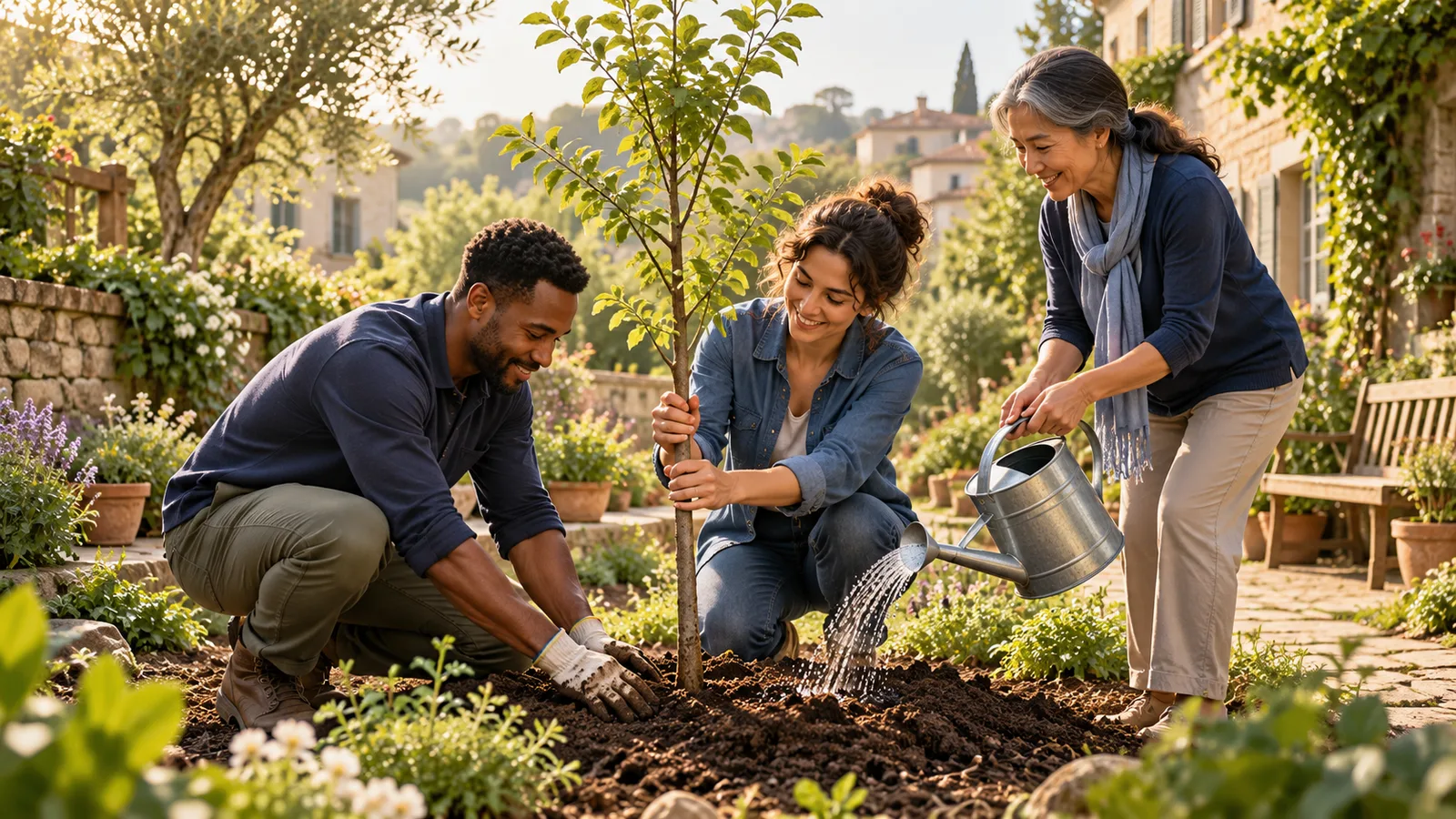
This might be an interesting idea to make a change within 5 years
Project Triangle
September 2026
Small teams working towards a fairer world. A different way to look at the future
War, poverty, pollution, and unfair opportunities can make the world feel impossible to change. When problems seem so large, it is easy to think that only governments, wealthy people, or powerful organizations can do anything useful.
Project Triangle starts with another possibility: ordinary people can make meaningful changes by working together. A small achievement can improve someone’s life and give others the confidence to act.
Its message is simple:
“We can, if we want, if we do.”
This is an invitation to turn concern into action. The project connects a hopeful vision with practical steps, shared responsibilities, and honest learning. It is currently a proposal for discussion and testing.
What is a Triangle?
A Triangle begins with three willing people. Participants are called Try Angels. The name describes people who try to contribute something good; it does not require any religious belief.
Three people can bring different skills and experiences. One might be good at organizing, another at practical work, and another at explaining ideas. Members do not need special qualifications to join, although some activities require trained professionals.
A Triangle chooses one achievable task. It could organize access to free learning materials, help repair shared equipment, or work with qualified technicians to improve lighting in a community building.
The people affected by the activity should help decide what is needed. Larger groups can take part when three people cannot represent everyone’s interests.
Four goals that belong together
Project Triangle connects local activities to four wider goals.
- A fairer money system
The project proposes studying a transparent, debt-free world currency. The aim is to explore whether money could better support basic needs and useful work without requiring its recipients to borrow it.
Important questions remain: Who would issue the money? How would decisions be controlled? How would its value be maintained?
This is a long-term research goal. Local Triangles can begin useful work using existing money and resources.
- Sustainable local energy
Communities could benefit from suitable solar, wind, or water energy. Local involvement could give people more influence over how energy is produced and used.
Equipment must fit local needs. Renewable energy still requires installation, maintenance, and eventual replacement. The project therefore calls for realistic budgets and qualified technical support.
- Free knowledge and healthcare
Everyone should have opportunities to learn and receive essential healthcare, regardless of income.
Triangles could help people find reliable educational materials, organise learning activities, or connect with existing health services. Teachers, healthcare workers, equipment, and supplies still need support. Free access for users requires a workable way to cover those costs.
- Sustainable peace
The project seeks cooperation across divisions and an end to trade in warfare for profit. It supports peaceful public discussion and changes to institutions through democratic processes.
Local cooperation cannot end war by itself. It can provide opportunities to work across differences and contribute to wider efforts for peace.
Begin with what a community already has
An addition proposed by Francesco Chiaramonte encourages Triangles to look carefully at existing resources before deciding what to do.
A community may have unused tools, available space, practical knowledge, or people willing to help. These resources may remain unused because people lack information or opportunities to cooperate.
A Triangle could begin by asking:
- What do people need?
- What skills and resources are already available?
- What prevents people from using them?
- What could we achieve by connecting them?
For example, someone with repair skills might work with someone who has tools and someone who can organize a suitable workspace.
Some communities might also test labor-time credits. People would earn credits for agreed work and exchange them for participating providers’ goods or services. Such a system would need clear rules and willing participants. It is an optional experiment, and essential help must remain available to people who cannot work.
Different beliefs and equal respect
Project Triangle welcomes different religious, political, philosophical, and cultural views, including the views of people without religious beliefs.
Respect does not mean that everyone must agree. People should be free to question ideas, express doubts, and suggest alternatives.
However, no person or group may use its beliefs to claim superior status, silence others, or control access to assistance. Decisions should follow fair procedures agreed by participants.
Nobody should have to join a religion, support a political party, or recruit new members to receive help.
Trust needs clear responsibilities
Good intentions become more dependable when people understand who is responsible for what.
Before starting, a team prepares a short plan explaining the activity, expected benefit, available resources, responsibilities, and timetable. It also considers what maintenance will need afterwards.
Money, materials, and donations should be recorded. Another person should check those records. A simple notebook or spreadsheet may be enough.
Participants need a clear way to raise concerns. Complaints should receive a prompt response, and people must be able to disagree or leave without punishment.
Public reports can explain spending and results while protecting personal information.
How would the project begin?
The first step is a one-month open consultation on Academia.edu. Researchers, community members, and practitioners would be invited to comment on the proposal.
The contributors would then explain what they learned and revise the plan.
Next, a willing community and coordinator could prepare a three-month pilot: a small first trial focused on one useful activity.
The team would examine practical questions. Did the activity help? What did it cost, including volunteer time? Could everyone participate fairly? Did people feel more able to make a difference together?
Difficulties and disappointing results would be reported alongside achievements. A small successful trial would provide useful experience, but would not prove that the approach works everywhere.
Technology can help people cooperate
AI tools could assist with translation, planning, educational summaries, and organizing feedback. Social media, artists, and public figures could share verified examples and invite participation.
People would remain responsible for checking information and making decisions. Publicity should respect privacy and avoid promises of guaranteed success.
Project Triangle’s wider hope is that practical cooperation can strengthen both communities and people’s belief in their own ability to contribute.
The starting point is manageable: find willing partners, listen to others, choose a useful task, and learn from doing it.
Crossroads: Labor Pains of a New Worldview, weaves together provocative findings from biology, psychology, network science, systems science, business, culture and media to portray the emergence of an integrated worldview. The film illuminates the inner workings of the human experience in the 21st century, urging viewers to challenge their own assumptions of why we do what we do, and what will it take to make a better world.
An interesting vision about Global Developments you can find in this online talk from Ray Dalio and the paper/book from Rafael Domingo: “The New Global Law.”
We can use music projects too.
“We are either going to grow up really fast or we’re going to destroy ourselves”